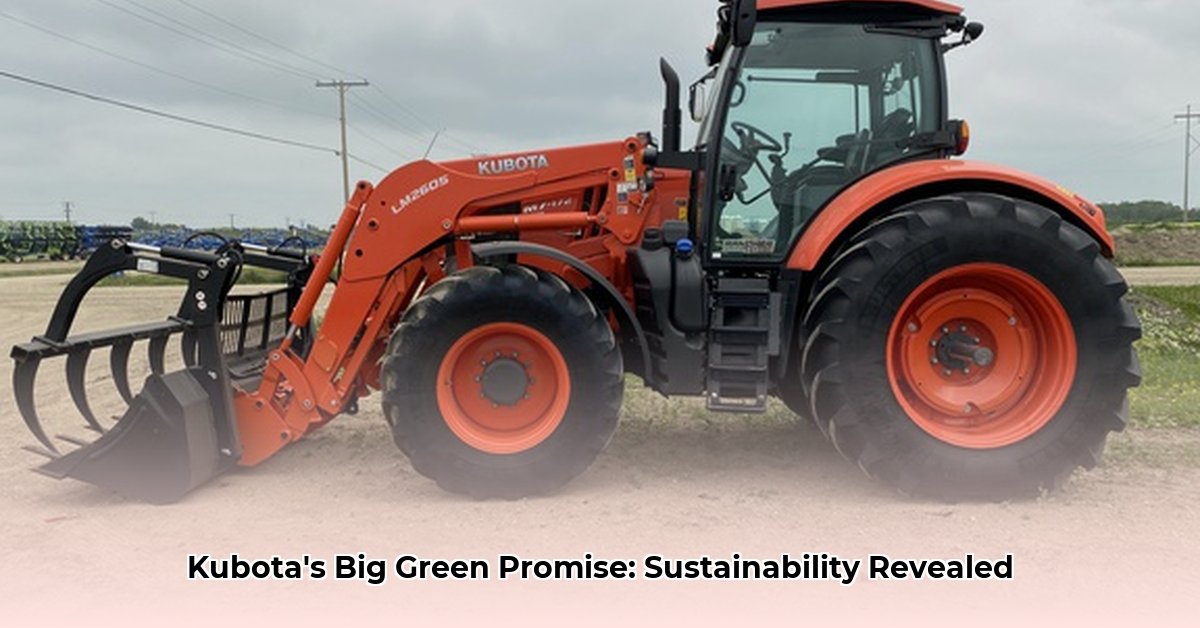
Kubota's Large Tractors: Power Meets Sustainability?
Kubota's large tractors, particularly the M8 series, represent a significant advancement in agricultural machinery, offering farmers increased power and efficiency for large-scale operations. However, the sustainability of these powerful machines requires closer scrutiny. While Kubota highlights their performance capabilities, detailed data on fuel efficiency and emissions remains limited, hindering a comprehensive sustainability assessment. This report analyzes the available information, identifies critical data gaps, and explores the implications for various stakeholders. For more detailed specifications, see the 2024 Kubota data.
Assessing the Environmental Footprint: Data Limitations
The powerful capabilities of Kubota's M8 series and other large tractors are undeniable. Their high horsepower allows farmers to cultivate expansive fields efficiently. Yet, a crucial piece of the puzzle is missing: comprehensive, publicly available data on fuel consumption and emissions. This lack of transparency significantly hinders any thorough assessment of their environmental impact. Without detailed specifications on fuel efficiency (liters/hectare) and greenhouse gas emissions (e.g., CO2, methane) per hectare, we cannot definitively evaluate their sustainability. This is a critical shortcoming needing immediate attention. How can we assess the long-term environmental consequences without this fundamental information?
The Need for Comprehensive Data: A Comparative Analysis
To adequately assess the sustainability of Kubota's large tractors, a robust comparative analysis is essential. This requires collecting detailed data points across multiple models and manufacturers, including:
- Fuel Consumption per Hectare: A direct comparison of fuel efficiency across different tractor models, accounting for variations in engine size, transmission type (e.g., hydrostatic vs. gear), and operating conditions. This metric offers a more practical measure than simple fuel consumption per hour.
- Emissions per Hectare: Quantifying greenhouse gas emissions (CO2, methane, nitrous oxide) per hectare cultivated, providing a clearer picture of the environmental impact of each machine.
- Soil Health Impacts: Assessing the effects of tractor weight and operation on soil compaction, nutrient levels, and overall soil health. This requires field studies comparing different tractor types and farming practices.
- Economic Viability: A comprehensive cost-benefit analysis considering fuel costs, maintenance expenses, purchase price, and potential operational savings versus smaller, potentially more sustainable tractors.
This multifaceted approach will provide a far more accurate evaluation than focusing solely on manufacturer-provided specifications.
Stakeholder Perspectives and Long-Term Implications
The sustainability of large agricultural machinery directly impacts multiple stakeholders:
Kubota: Greater transparency in data sharing will build trust, potentially attracting environmentally conscious customers and enhancing brand reputation. Investing in research and development of more sustainable technologies is crucial for long-term success.
Farmers: Access to comprehensive data on fuel efficiency, emissions, and operational costs enables informed decision-making, promoting the adoption of sustainable farming practices.
Regulators and Policymakers: Accurate data is vital for developing effective environmental regulations and incentivizing the development and adoption of sustainable agricultural technologies.
Researchers and Scientists: Continued research is necessary to fill the data gaps, refine assessment methodologies, and explore innovative solutions for sustainable agriculture.
Conclusion: Towards a Sustainable Future in Agriculture
The sustainability of Kubota's large tractors, and indeed all large agricultural machinery, requires a collective effort. Kubota's proactive release of detailed fuel efficiency and emissions data is paramount. Furthermore, independent research and comparative analyses are crucial to provide a complete picture. Only through transparency, collaboration, and rigorous scientific investigation can we effectively assess and improve the environmental performance of these powerful machines and build a more sustainable future for agriculture. The absence of readily available data currently hinders this crucial progress. We urge increased transparency and research efforts to fully understand the environmental implications of large-scale agricultural machinery.